





Azopt Eye Drop 1% (5 ml) Eye Drop
Available Dosage
Out Of Stock
| SKU: | 132 |
|---|---|
| Active Ingredient: | Brinzolamide opthalmic suspension |
| Manufacturer: | Alcon Laboratories Inc, USA |
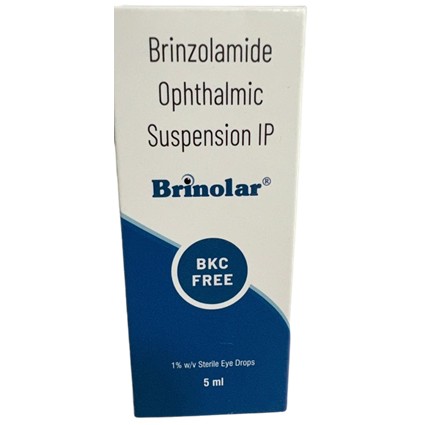
Buy Azopt Eye Drop 1% Eye Drop (Brinzolamide opthalmic suspension) Online
Azopt Opthalmic Suspension is an eye care medication. The active ingredient of the drug is Brinzolamide Ophthalmic Suspension.
The medicine is mainly used to treat glaucoma and high IOP issues. The medicine may be used for other purposes not mentioned above. The medicine reduces the eye fluid, lowering the pressure inside the eye. The manufacturer of Azopt Eye Drop - 1% (5 ml) Eye Drop is Ajanta Pharma, India.
You should not use Azopt eye drops if you are allergic to the drug's main ingredient or other ingredients.
Inform your doctor if you are pregnant, planning to be pregnant or breastfeeding your baby.
Also, mention if you are using any eye drops or have any other eye condition.
Certain medicines may interact with Brinzolamide Opthalmic and can affect the working of the medicine. Hence it is best to tell your doctor about all the medicines that you are currently using, especially salicylates such as aspirin, which may interact with Brinzolamide Opthalmic and affect its working.
Things to remember:
— Use the medicine only for specified purposes and not for any other purpose.
— Store the medicine at a cool and dry pace away from heat, light and moisture.
— After using the medicine, the eyes may become blurred. Hence it is best not to indulge in any activity that requires alertness, such as driving or operating machinery.
— If you need to apply another drop, there should be a gap of at least 10 minutes between the two drops.
— Never touch the tip of the medicine bottle, and also see to it that the tip does not touch the eye. The drop should be applied from a distance so that the chances of infection are not there.
— Do not wear contact lenses while you are applying the medicine. The contact lenses need to be removed, and apply the eye drop after some time. Also, wait for some time before putting the contact lenses back.
Some of the common side effects of the medicine include:
— Double vision
— Blurred vision
— Burning or stinging in the eye
— Dropping eyelid
— Bitter or unusual taste in your mouth
— Feeling like something is in your eyes
— Dry eyes
— Headache
— Nausea
You must contact your doctor immediately if the above side effects persist or become serious.
Some of the serious side effects of the medicine include:
Oozing, sensitivity to light, eye discomfort, redness and swelling in the eye, crusting of your eyes or eyelids. If you experience any serious side effects after using the medicine, get emergency medical attention as soon as possible.
The drug is to be used strictly as per doctor's advice. The dosage of the medicine should not be altered without consulting him. If you are wearing contact lenses, you must remove the contact lenses first and then, after a gap of 15 minutes, you should put the medicine in the eye. Wash your hands before application of the medicine. Use the medicine as per the instruction of your doctor.
The medicine should be used for the entire prescribed period and should not be stopped in between as it may lead to adverse eye effects.
Though an overdose of the medicine may not result in any serious side effects, ideally 1 to 2 drops, each is advisable. In case of a missed dose, you must apply for the medicine as soon as you remember, provided there is a sufficient gap between the two doses. Never double dose to compensate for the missed dose. Using the medicine daily at the same time will reduce the chance of missing any dose.
What is Azopt Eye Drop 1% used for?
Azopt Eye Drop 1% contains brinzolamide, a carbonic anhydrase inhibitor used to lower elevated intraocular pressure (IOP) in patients with ocular hypertension or open-angle glaucoma. Raised IOP is the primary risk factor for optic nerve damage and permanent vision loss in glaucoma. Brinzolamide works by reducing the production of aqueous humour inside the eye, thereby decreasing pressure. Azopt is used either as monotherapy or in combination with other IOP-lowering agents such as beta-blocker eye drops, and is prescribed widely in the USA, UK, and Australia.
How does brinzolamide in Azopt Eye Drops lower eye pressure?
Brinzolamide, the active ingredient in Azopt Eye Drop 1%, works by inhibiting carbonic anhydrase II — an enzyme found in the ciliary body of the eye. This enzyme normally facilitates the production of bicarbonate, which drives the secretion of aqueous humour. By blocking this enzyme, brinzolamide reduces the rate of aqueous humour formation, directly lowering intraocular pressure. As a topical eye drop, brinzolamide acts locally in the eye with minimal systemic absorption compared to oral carbonic anhydrase inhibitors like acetazolamide.
How long does Azopt Eye Drop take to lower intraocular pressure?
Azopt Eye Drop 1% typically begins reducing intraocular pressure within 2 hours of the first instillation, with peak effect observed at approximately 3 hours. With regular twice or three-times daily use as prescribed, consistent IOP reduction is maintained throughout the day. Long-term pressure control is usually established within the first 2 to 4 weeks of treatment. Your ophthalmologist will monitor your IOP at follow-up appointments to confirm the treatment is achieving target pressure and adjust therapy if needed.
How should Azopt Eye Drops be instilled correctly?
Shake the Azopt Eye Drop bottle gently before each use. Tilt your head back, pull the lower eyelid down to form a small pocket, and instil one drop into the affected eye(s). Close your eye gently and press on the inner corner (nasolacrimal duct) for 1 to 2 minutes to reduce systemic absorption. If using other eye drops, wait at least 10 minutes between each. Azopt is typically instilled 2 to 3 times daily as directed by your ophthalmologist. Do not touch the dropper tip to your eye or any surface.
Is Azopt Eye Drop safe for patients with kidney problems?
Azopt (brinzolamide) is a sulphonamide-derived drug and should be used with caution in patients with severe renal impairment, as brinzolamide and its metabolite can accumulate in the body when kidney function is reduced. Patients with severe kidney disease (creatinine clearance below 30 mL/min) are generally advised to avoid Azopt. For mild to moderate renal impairment, your ophthalmologist will weigh the benefits against risks and may choose an alternative. Always inform your eye doctor about any kidney conditions before starting brinzolamide treatment.
Can Azopt Eye Drops be used with other glaucoma eye drops?
Yes, Azopt Eye Drop 1% is commonly used in combination with other IOP-lowering agents, particularly prostaglandin analogues (such as latanoprost or bimatoprost) and beta-blocker eye drops (such as timolol). However, it should not be combined with oral carbonic anhydrase inhibitors like acetazolamide, as this may increase the risk of systemic side effects without additional IOP benefit. When using multiple eye drops, wait at least 10 minutes between instillations to prevent dilution and maximise absorption of each medication.
Azopt vs Trusopt: which is better for glaucoma IOP control?
Azopt (brinzolamide 1%) and Trusopt (dorzolamide 2%) are both topical carbonic anhydrase inhibitors used for glaucoma, but they differ in comfort. Azopt has a near-neutral pH that closely matches the eye's natural pH, making it significantly less stinging and irritating on instillation compared to Trusopt, which has a more acidic formulation. In terms of IOP-lowering efficacy, both are clinically comparable. Patients who experience burning or discomfort with dorzolamide often find Azopt better tolerated. Your ophthalmologist will recommend based on your comfort and IOP response.
Is brinzolamide (Azopt) as effective as oral acetazolamide for glaucoma?
Brinzolamide (Azopt) and oral acetazolamide both inhibit carbonic anhydrase to lower IOP, but differ significantly in side effect profile. Oral acetazolamide achieves greater systemic drug levels and can lower IOP more substantially — making it useful in acute angle-closure glaucoma. However, it carries significant systemic side effects including electrolyte disturbances, fatigue, and kidney stones. Azopt acts locally in the eye with minimal systemic absorption, making it far better tolerated for long-term use. Most patients with chronic open-angle glaucoma or ocular hypertension are managed with topical agents like Azopt first.
Azopt Eye Drop 1% is available from AllDayChemist.com, a licensed pharmacy known for offering authentic ophthalmic and glaucoma medicines to patients in the USA, UK, Australia, and most other countries since the introduction of the website in 2002. AllDayChemist offers authentic, manufacturer-sourced brinzolamide at competitive prices, with discreet packaging and free worldwide shipping on qualifying orders. For patients managing chronic glaucoma who require ongoing eye drop supply, AllDayChemist's easy reorder system makes long-term treatment convenient and affordable.
Azopt Eye Drop 1% is available from AllDayChemist.com, a licensed pharmacy known for offering authentic ophthalmic and glaucoma medicines to patients in the USA, UK, Australia, and most other countries since the introduction of the website in 2002. AllDayChemist offers authentic, manufacturer-sourced brinzolamide at competitive prices, with discreet packaging and free worldwide shipping on qualifying orders. For patients managing chronic glaucoma who require ongoing eye drop supply, AllDayChemist's easy reorder system makes long-term treatment convenient and affordable.
Can I order Azopt Eye Drops internationally for glaucoma management?
Yes. AllDayChemist.com delivers Azopt Eye Drop 1% to patients worldwide, including the USA, UK, and Australia. As a verified pharmacy trusted since 2002, AllDayChemist provides genuine brinzolamide eye drops at competitive prices with discreet packaging and free tracked shipping on eligible orders. Patients managing chronic glaucoma need uninterrupted access to an IOP-lowering medication — AllDayChemist's reliable international delivery makes that possible. Ensure you carry a valid prescription from your ophthalmologist when ordering prescription ophthalmic medicines.
What are the side effects of Azopt Eye Drop brinzolamide?
Common side effects of Azopt Eye Drop 1% include transient blurred vision immediately after instillation (which typically clears within a few minutes), mild ocular discomfort or stinging, dry eye, and a bitter or unusual taste in the mouth. Some patients notice a slight foreign body sensation. Allergic reactions presenting as eye redness, itching, or swelling are less common. Systemic side effects are rare due to low absorption, but patients with sulphonamide allergies should inform their doctor before using Azopt, as cross-sensitivity is possible.
Who should avoid using Azopt Eye Drops?
Azopt Eye Drop 1% should not be used by patients with a known hypersensitivity to brinzolamide, sulphonamides, or any component of the formulation. It is contraindicated in patients with severe renal impairment. Patients with severe hepatic impairment, hyperchloraemic acidosis, or a history of significant sulphonamide drug reactions should avoid Azopt. Caution is advised in patients wearing soft contact lenses — remove lenses before instilling and wait at least 15 minutes before reinserting. Pregnant and breastfeeding women should discuss use with their doctor, as safety data is limited.
Leading Online Pharmacy
100% Genuine
Products
& OTC Products
Login
Sign up
Leading Online Pharmacy
100% Genuine
Products
& OTC Products
Login
Sign Up
Leading Online Pharmacy
100% Genuine
Products
& OTC Products
Forgot Password ?