Having a clear face without acne often feels smooth, calm, and comfortable. It gives us a sense of confidence when we move out and interact with family, friends, and others. The skin texture, with no rough bumps, swelling, itchiness, or tenderness, is a blessing; however, self-care at each phase is required, even if you have clear skin.
Acne is a common skin condition that occurs when hair follicles or pores become clogged with oil (sebum), dead skin cells, and bacteria. It is especially common during puberty due to hormonal changes, but genetics, stress, skincare habits, and diet can also influence its development. Acne can appear in different forms, ranging from mild to severe, depending on the level of inflammation and the depth of the blockage. For severe types of acne, a dermatologist’s intervention is important to identify the root cause and the appropriate treatment.
What is mild acne?
Mild types of acne are the least severe form and usually involve small bumps with little to no pain and minimal redness. It does not involve deep, hard, or painful lumps and often responds well to gentle skincare and over-the-counter treatments.
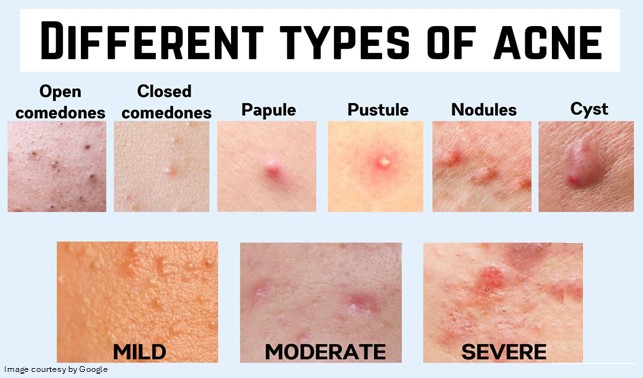
Common mild types of acne include whiteheads, blackheads, mild papules, comedonal acne, and mild acne mechanica. Whiteheads, also known as closed comedones, appear as small white or skin-colored bumps caused by oil and dead skin trapped beneath closed pores. Blackheads, or open comedones, appear as small dark dots and form when pores remain open, and the trapped oil oxidizes upon contact with air. Mild papules are small red or pink bumps that may feel slightly tender but do not contain pus. Comedonal acne mainly consists of blackheads and whiteheads. It is very common among teenagers, while mild acne mechanica results from friction, sweat, masks, helmets, or tight clothing and usually clears when the irritation is reduced.
Different types of acne?
Acne types of pimples can also be classified into non-inflammatory and inflammatory types. Non-inflammatory acne includes blackheads and whiteheads, which occur without redness or swelling. Inflammatory acne involves redness, swelling, and sometimes pain due to bacterial irritation. Papules are small, inflamed bumps without pus, while pustules are red bumps with a white or yellow centre, commonly referred to as pimples. More severe forms of acne include nodular and cystic acne, which develop deep under the skin. Nodules are large, hard, and painful lumps that can last for weeks or months, whereas cysts are soft, pus-filled, painful lesions with a high risk of permanent scarring. These severe forms usually require medical treatment from a dermatologist.
Hormonal acne is another common type, particularly among teenagers and young adults. It often appears on the jawline, chin, and cheeks and may worsen during menstrual cycles due to hormonal fluctuations that increase oil production. Acne mechanica occurs when heat, sweat, friction, or pressure clog pores, commonly affecting areas where backpacks, helmets, masks, or tight clothing come into contact with the skin. Fungal acne, also known as Malassezia folliculitis, is caused by yeast overgrowth rather than bacteria and appears as many small, itchy bumps, usually on the forehead, chest, or back. Regular acne treatments may not be effective for this type of acne.
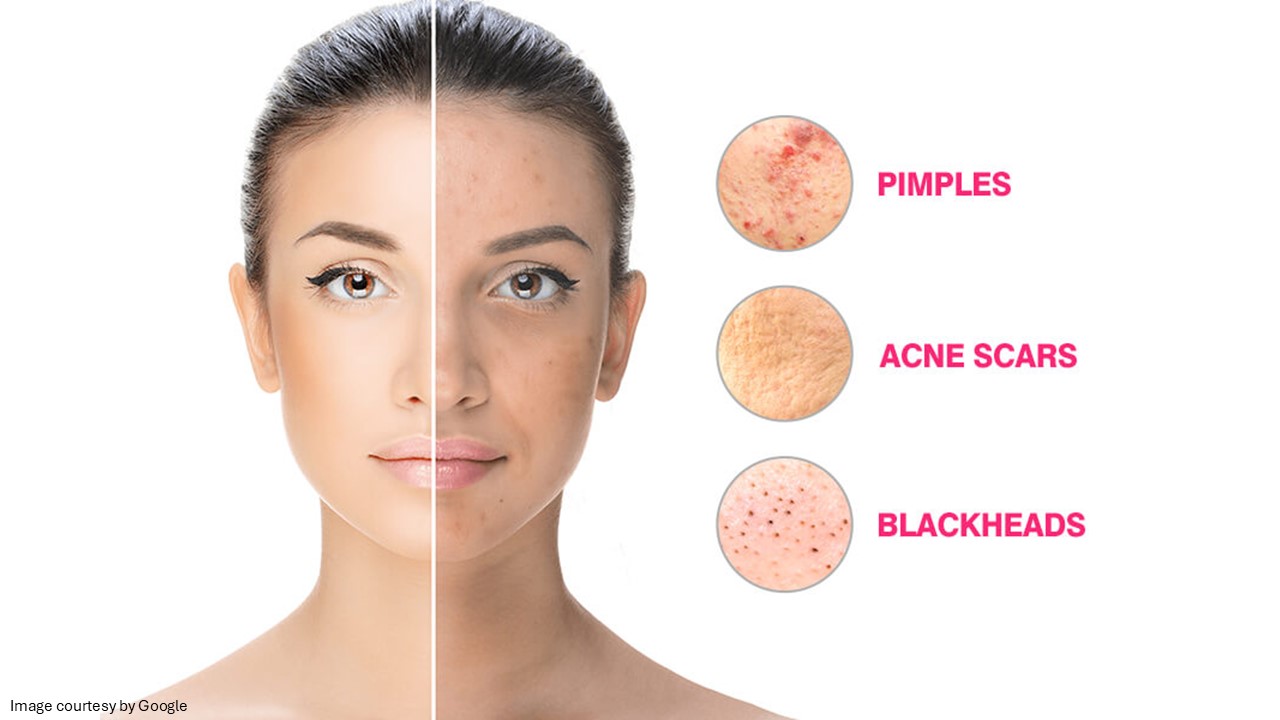
Acne types of spots – Acne can leave behind scars and dark marks, known as post-acne marks, which are not active acne lesions. These include dark spots called post-inflammatory hyperpigmentation, indented scars from severe acne, and raised scars from excess tissue formation. Picking or popping pimples increases the risk of scarring and should be avoided.
Treatment and medications for acne
Treatment for mild acne focuses on gentle daily skincare, such as washing the face twice daily with a mild cleanser, avoiding harsh scrubs, and not picking pimples. Helpful ingredients include salicylic acid to unclog pores, benzoyl peroxide to kill acne-causing bacteria, and adapalene to prevent new breakouts, usually applied at night. Improvement may take 2 to 4 weeks, while clearer skin often appears after 6 to 8 weeks with consistent care.
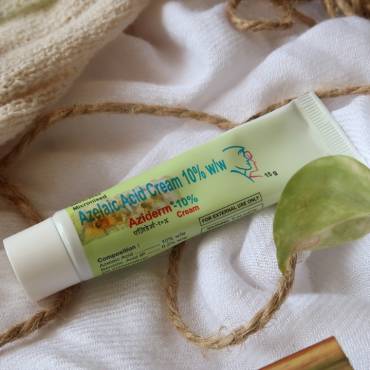
Medication for acne are divided into topical and oral treatments. Topical medications are commonly used for mild to moderate acne and include retinoids such as adapalene, tretinoin, and tazarotene, which help unclog pores and promote skin renewal. Benzoyl peroxide reduces bacteria and inflammation, while topical antibiotics such as clindamycin and erythromycin are used with benzoyl peroxide to help prevent antibiotic resistance. Combination products that contain two or more active ingredients are often more effective. Other topical options include azelaic acid, salicylic acid, and clascoterone for hormonal acne.
Oral medications are reserved for moderate to severe acne or cases that do not respond to topical treatments. These include oral antibiotics such as doxycycline, minocycline, and sarecycline, which reduce bacteria and inflammation. Isotretinoin is a powerful oral retinoid used for severe or cystic acne and works by shrinking oil glands and preventing future breakouts, but it requires close medical supervision due to possible side effects. Hormonal treatments, such as oral contraceptive pills and spironolactone, are particularly effective for hormonal acne.
In general, acne medications take 4 to 12 weeks to show noticeable improvement, and combination therapy is often more effective than a single treatment. Proper acne care includes using non-comedogenic products, protecting the skin from excessive sun exposure, and being patient with treatment results. A dermatologist should be consulted if acne becomes painful or severe, if scarring begins, or if over-the-counter treatments do not show improvement after several weeks.
Acne medication type and its action
| Type | Main action |
| Retinoids (topical/oral) | Unclog pores and increase skin cell turnover |
| Benzoyl Peroxide | Reduces acne bacteria + inflammation |
| Antibiotics | Kill bacteria & calm redness. |
| Isotretinoin | Shrinks oil glands and prevents multiple acne causes |
| Hormonal agents | Reduce hormonal stimulation of oil glands. |
Takeaway!
Getting rid of acne is important. Acne pimples affect self-confidence in many aspects. Mild acne can be treated at home with self-care and over-the-counter products, whereas moderate to severe acne requires treatment intervention by a dermatologist. Other important safety notes to heal acne faster include:
-
- Avoid sun exposure or use sunscreen with acne medications.
- Some treatments aren’t safe during pregnancy; talk to a doctor first.
- Never use antibiotics alone; always use them with benzoyl peroxide.
- Avoid using harsh chemical-based face cleansers.