Fetal Alcohol Syndrome: Understand Symptoms, Causes, Diagnosis & Treatment Guide

Fetal Alcohol Syndrome: Understand Symptoms, Causes, Diagnosis & Treatment Guide
Fetal alcohol syndrome is a severe condition causing developmental delays in a child that results from alcohol consumption during the mother’s pregnancy. In this blog, you will explore the causes, diagnosis, and treatment options related to fetal alcohol syndrome while also highlighting the importance of ongoing prevention and support.
Introduction
Scientific evidence has shown that prenatal alcohol exposure can cause damage to the developing foetuses. Fetal alcohol syndrome is one of the most serious outcomes associated with prenatal alcohol exposure. This type of exposure is considered one of the leading preventable causes of congenital disabilities and developmental issues in babies. Currently, there is no cure for this condition, but awareness, prevention, and early detection are essential to improve outcomes for affected children.
What is fetal alcohol syndrome?
Fetal alcohol syndrome is categorized under a group of conditions known as fetal alcohol spectrum disorders (FASDs). It is a lifelong condition that can happen when a developing fetus is exposed to alcohol in the womb. Alcohol consumption during pregnancy can disrupt the normal growth pattern, particularly affecting the brain and central nervous system development of the baby. As a result, children may experience a range of serious challenges, involving physical, mental, behavioural, and learning deficits that may persist into adulthood.
Understanding fetal syndrome causes starts by knowing about how alcohol acts in your body. On consumption of alcohol by pregnant women, it directly enters the bloodstream, where it crosses the placenta, and ultimately reaches the developing fetus. As the fetus is unable to process alcohol as an adult does, alcohol stays in the system for a longer duration, potentially affecting the normal growth and development of the body. The effects of alcohol exposure on the foetus can vary widely depending on numerous factors, from the amount consumed, the pregnancy trimester, to genetic and overall mental health. As mentioned above, however, no amount of alcohol has been proven to be safe to consume during pregnancy.
Estimating the prevalence of FAS and FASD in the US
The damaging effects of alcohol consumption during pregnancy are found in children born in all socioeconomic classes and almost in all cultures where alcohol usage is prevalent, and FASD are considered a serious concern and social problems across the world. Alcohol usage by pregnant mothers is a major known cause of neurodevelopmental impairments and learning difficulties in the United States and is completely preventable. Here, it is extremely important to note that there is absolutely no safe amount or safe type of alcohol during pregnancy. According to reports from the Centres for Disease Control and Prevention (CDC), FAS prevalence rates range from 0.2 to 1.5 cases per 1,000 births across various populations. Other studies estimate rates ranging from 0.5 to 2.0 cases per 1,000 live births. According to CDC FAS estimates, among the approximately 4 million infants born each year, about 1,000 to 6,000 will have FAS. Also, available data indicate that poverty is strongly related to women’s alcohol use before and during pregnancy, contributing to an excess of children with FAS in economically challenged groups. Moreover, in 1999, over half of all US women of reproductive age reported alcohol consumption in the past month. Majorly, these women drank occasionally, but about 15% could come under the category of moderate to heavy drinkers. At the same time, around 13% of women reported being classified as binge drinkers as they believed they consumed five or more drinks on one occasion.
Also Read: Alcohol – How Much Is Too Much?
Symptoms of fetal alcohol syndrome
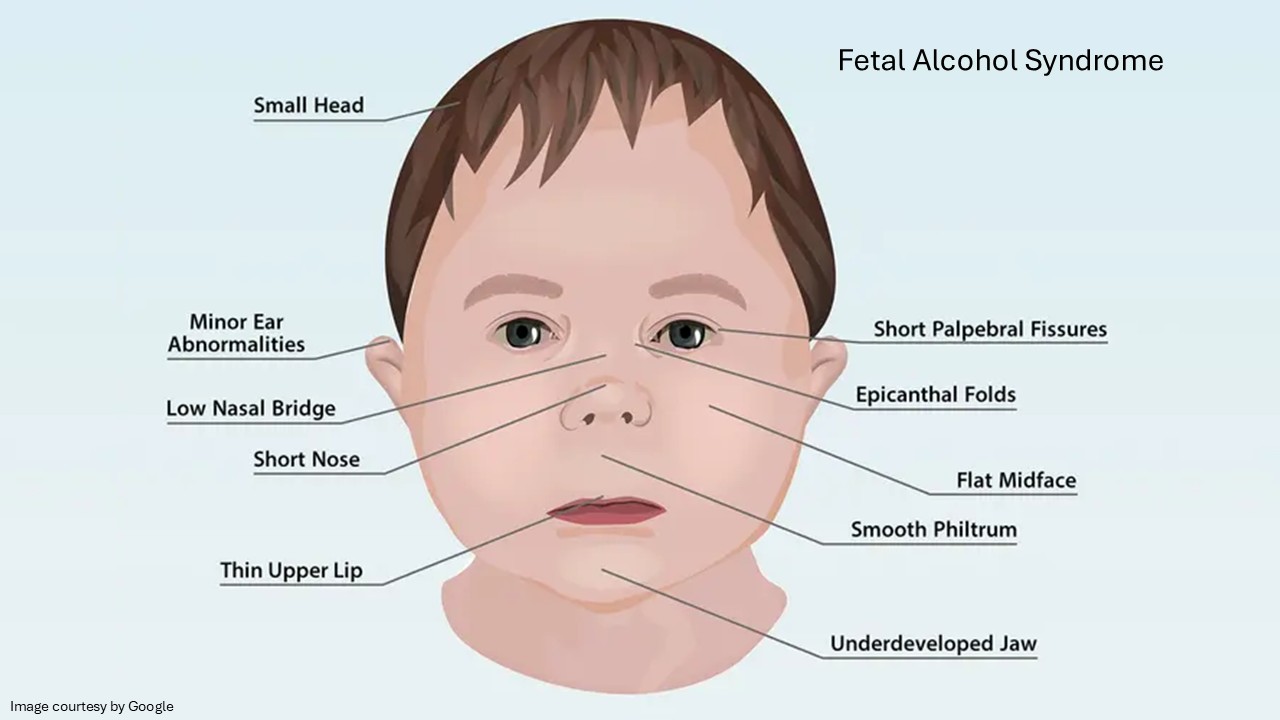
The signs of fetal alcohol syndrome may vary from one child to another. Some signs and symptoms are evident at birth, while others are prominent as the child grows and faces developmental challenges. Children with fetal alcohol syndrome may have at least two of the following distinctive facial features:
- Small width of eye opening
- A smooth ridge between the nose and the upper lip.
- Thin upper lip
Children with FAS typically appear smaller than average. Their heads may be small compared to their bodies. Such babies may also tend to have weak, floppy muscles. In addition to unique facial features, these children may have symptoms such as noise sensitivity, fussiness, vision/hearing problems, and sleep and feeding difficulties.
Moreover, children, teenagers, and adults may develop certain fetal alcohol syndrome symptoms over time. These include:
- Delayed speech development
- Trouble concentrating and short attention span
- Difficulty differentiating between reality and fantasy
- Learning deficits
- Low IQ
- Hyperactivity
- Problems related to reasoning and judgment skills
- Problems faced in school performances
- Trouble with coordination
- Social issues
- Sensory processing problems
Those with FAS are at increased risk of developing mental health issues, including depression, anxiety, mood disorders, and attention deficit hyperactivity disorder (ADHD). In such cases, early support and timely introduction of appropriate interventions can effectively help manage these concerns.
Causes of fetal alcohol syndrome
As mentioned above, alcohol exposure during pregnancy is the main cause of fetal alcohol syndrome. Alcohol can interfere with organ formation, damage developing brain cells, block oxygen and nutrient delivery, and affect the normal development of the nervous system.
Fetal alcohol syndrome diagnosis: How healthcare professionals identify the condition
Obtaining an accurate fetal alcohol syndrome diagnosis can sometimes be tough because many symptoms overlap with other developmental disorders. Healthcare providers usually start by analyzing a child’s medical and developmental history. All information associated with prenatal alcohol exposure, when provided, can help the healthcare professional identify the root cause. Medical evaluation usually involves physical examinations to assess growth patterns, facial characteristics, and overall development. Healthcare experts may also measure height, weight, and the circumference of teh baby’s head to check whether a growth deficit is present. Assessing development-related issues. Assessing the development-related issues is equally important. These evaluations help identify difficulties involving language, learning, memory, attention, and social functioning.
In many cases, healthcare professionals administer standardized tests to understand a child’s strengths and challenges. Diagnosis involves collaboration among paediatricians, neurologists, psychologists, speech therapists, and educational specialists. This multidisciplinary approach ensures that all aspects of the child’s development are carefully evaluated.
Also Read: Birth control for women with PCOS
Fetal Alcohol Syndrome Treatment: Managing symptoms and improving quality of life
Well, despite having no cure for FAS, effective fetal alcohol syndrome treatments are present that target managing symptoms and helping individuals reach their full potential. Early intervention programs are often considered the foundation of successful treatment. Children who receive support in the early years frequently achieve better outcomes than those diagnosed later.
- Speech therapy effectively supports communication skills and language development. Occupational therapy may help identify issues with a child’s daily activities, coordination, and sensory processing. For children experiencing balance delays, physical therapy can support motor development and confidence.
- Behavioural therapy is another crucial part of treatment. This helps children to learn coping strategies, improve social interactions, and develop better emotional regulation skills.
- Educational accommodations are important as well. These include Individualized learning plans, specialized instruction, and classroom modifications that help children succeed academically despite developmental challenges.
- There are some cases where pharmaceutical treatment is introduced to manage associated conditions such as ADHD, anxiety, depression, or mood disorders. While medication does not treat the underlying condition itself, it may improve quality of life by addressing specific symptoms.
When discussing fetal alcohol syndrome prevention, the message from healthcare professionals is remarkably clear. The safest choice during pregnancy is to avoid alcohol completely.