Confused between tretinoin gel vs cream? Discovering the key differences, benefits, and which formulation best suits your skin type helps achieve the desired results.
If you have been exploring skincare treatments for acne, anti-ageing, or uneven skin tone, chances are you have come across the name tretinoin. It is one of the most clinically proven retinoids available in the skincare segment. But once you decide to add it to your routine, a common question naturally comes to mind about choosing the correct formulation, “gel” or “cream”, which one is good? The debate around tretinoin gel vs cream is more than just a matter of preference. The formulation you choose can affect how well the product works for you, how your skin reacts, and how comfortable the experience feels day to day.
In this guide, we break down the key information you need to make the right call for your skin. This blog provides the best possible insight into Tretinoin Gel vs Cream – which is better for your skin.
How Does Tretinoin Work? The Science Behind the Results
Tretinoin is a retinoic acid, a biologically active form of Vitamin A, that works directly at the cellular level to transform your skin from within. When applied topically, tretinoin binds to specific retinoic acid receptors (RARs) in the skin cells. This binding triggers a cascade of biological processes that fundamentally change how your skin behaves.
- Accelerates cell turnover — Tretinoin speeds up the natural shedding of old, damaged skin cells and promotes the rapid emergence of fresh, healthy cells to the surface. This is the foundation of all its benefits — from clearer skin to smoother texture.
- Unclogs pores — By preventing dead skin cells from clumping inside the follicle, tretinoin stops the formation of comedones (blackheads and whiteheads) — the root cause of acne.
- Boosts collagen production — Tretinoin stimulates fibroblasts in the dermis to produce more collagen, which firms the skin and visibly reduces fine lines and wrinkles over time.
- Fades hyperpigmentation — It disperses melanin granules and inhibits excess pigment production, gradually evening out dark spots and post-acne marks.
- Thickens the dermis — Long-term use increases dermal thickness, making skin look plumper, more resilient, and youthful.
Tretinoin Gel: Things to know
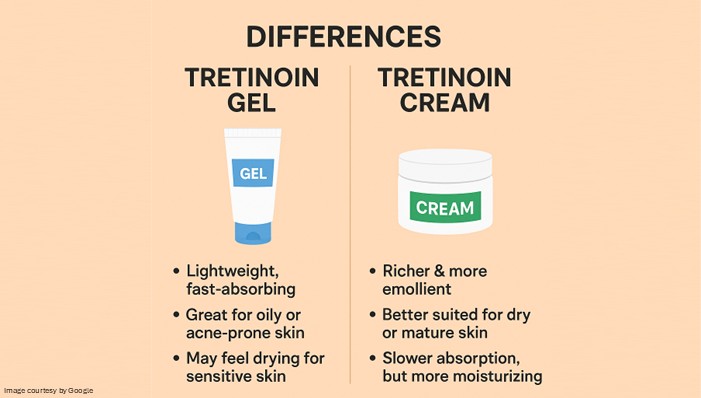
Tretinoin gel has an alcohol or water-based gel base. This makes it lightweight, fast-absorbing, and ideal for certain skin types. This formulation is best suited to people with oily, acne-prone skin; combination skin; those living in humid climates; and those who dislike heavy or greasy skincare products.
The key advantages of gel form:
- Penetrates the skin more rapidly, which can mean faster results
- Does not leave a greasy residue
- Less likely to clog pores
- Often preferred for active acne treatment
Potential downsides of tretinoin gel :
- More likely to cause dryness, peeling, and irritation, especially during the initial adjustment period
- The alcohol content in some gel formulations can be harsher on the skin barrier
- Not recommended for dry or sensitive skin
Tretinoin Cream: Things to know
Tretinoin cream uses an emollient, oil-based base. It is thicker, more moisturising, and gentler on the skin compared to the gel formulation. This formulation is best suited for people with dry, sensitive skin; mature skin (anti-aging use); normal skin type; and those prone to irritation or redness.
The key advantages of cream formulation:
- The creamy base adds hydration, reducing dryness and flaking
- Gentler on the skin barrier, making it easier to tolerate
- Better for individuals using tretinoin primarily for anti-ageing
- Less stinging or burning sensation on first use
Potential downsides of tretinoin cream:
- May feel heavier or more occlusive on oily skin
- Slightly slower penetration compared to gel
- Can feel greasy in warmer or more humid conditions
Tretinoin Gel vs Cream: Comparison
The following table provides a clear, side-by-side comparison of the key differences between tretinoin gel and cream to help you choose the right formulation.
| Feature | Tretinoin Gel | Tretinoin Cream |
| Base | Water/alcohol-based | Oil/emollient-based |
| Texture | Lightweight, non-greasy | Rich, moisturising |
| Absorption | Fast | Moderate |
| Best For | Oily, acne-prone skin | Dry, sensitive, mature skin |
| Irritation Risk | Higher (especially initially) | Lower |
| Pore-clogging Risk | Very low | Slightly higher |
| Anti-ageing Use | Moderate | Preferred |
| Acne Treatment | Preferred | Moderate |
| Climate Suitability | Humid/warm climates | Dry/cold climates |
| Popular Product | A-Ret Gel | Retino-A Cream |
Tretinoin Gel vs Cream: Which one is better for acne?
For active acne, tretinoin gel is generally preferred. Its lightweight, non-comedogenic base means it will not block pores or add excess oil to an already oily complexion. The faster absorption also means the active ingredient reaches the deeper layers of skin more efficiently, helping to clear congested pores sooner. The A Ret Gel is a go-to choice for acne-prone individuals. Starting with a lower strength — 0.025% — and gradually building up to 0.05% or 0.1% allows the skin to adapt without excessive irritation.
This means that if your acne is accompanied by dryness or sensitivity, tretinoin cream may be a more sustainable option, even if results take slightly longer.
Tretinoin Gel vs Cream: Which is better for anti-aging?
When it comes to fine lines, wrinkles, and loss of firmness, tretinoin cream tends to outperform gel. The emollient base provides hydration alongside the active ingredient, which is especially important for mature or dry skin that has already lost some of its natural moisture barrier.
Retino A Cream is widely used for anti-aging purposes. Its moisturising base helps minimise the dryness and peeling that often accompany tretinoin use, making it easier to stay consistent, and consistency is everything with tretinoin.
Let your dermatologist decide the best tretinoin strength, formulation and treatment duration for the results you expect.
How to Use Tretinoin Safely?
Regardless of which formulation you choose, the application method matters as much as the product itself. Follow these steps to get the best results while minimising irritation.
Step 1 — Start slow. Begin with a pea-sized amount, two to three nights per week. Your skin needs time to adjust to the retinoid before you increase frequency.
Step 2 — Apply to dry skin. Wait at least 20–30 minutes after washing your face before applying tretinoin. Applying to damp skin increases absorption and the risk of irritation.
Step 3 — Use a gentle moisturiser. After tretinoin has fully absorbed (about 20 minutes), layer a fragrance-free moisturiser on top to lock in hydration and support the skin barrier.
Step 4 — Always use sunscreen. Tretinoin increases photosensitivity. Apply a broad-spectrum SPF 30 or higher every single morning without exception.
Step 5 — Be patient. Visible improvements typically begin around the 8–12 week mark. Full results for anti-ageing or significant acne clearance can take 6 months or more.
Common Side Effects of Tretinoin and How to Manage Them
Tretinoin is effective, but it does come with a well-known adjustment period often called the “retinoid purge” or “retinisation phase.” Common side effects include:
- Redness and irritation
- Peeling or flaking skin
- Dryness and tightness
- Initial acne breakouts (the purge)
- Increased sun sensitivity
Most of these side effects ease significantly after the first 4–8 weeks as your skin acclimatises. To manage them, use a simple, gentle skincare routine, avoid other active ingredients (such as AHAs, BHAs, or vitamin C) on the same nights as tretinoin, and never skip moisturiser or sunscreen. If irritation is severe or persistent, consult a dermatologist before continuing use.
Tips for Choosing Between Gel and Cream
Still unsure which form is right for you? Use these quick guidelines to steer your decision. Choose tretinoin gel if you:
- Have oily or combination skin
- Are primarily treating acne or clogged pores
- Prefer a lightweight, non-greasy texture
- Live in a warm or humid climate
Choose tretinoin cream if you:
- Have dry, sensitive, or mature skin
- Are primarily targeting signs of ageing
- Experience excessive irritation with gel formulations
- Live in a colder or drier climate
You can also try both and alternate — some users use cream in winter when skin is drier and switch to gel in summer when the skin produces more oil.
Where to Buy Tretinoin Products Online
When it comes to trusted skincare, AllDayChemist stands out as a reliable destination for buying tretinoin online. AllDayChemist offers a safe, convenient way to access high-quality tretinoin formulations at affordable prices. We stock only authentic, manufacturer-sourced tretinoin formulations, so you never have to worry about counterfeit skincare products.
- A-Ret Gel — Available in 0.025%, 0.05%, and 0.1% strengths. Ideal for acne treatment and oily skin types.
- Retino-A Cream — Available in multiple strengths. Excellent for anti-ageing, hyperpigmentation, and sensitive skin.
All products are sourced from reputable manufacturers and delivered with reliable shipping. Always consult your healthcare provider or dermatologist to confirm the right strength and formulation for your specific needs. Click here to access a wide range of acne products.
Takeaway!
The choice between tretinoin gel vs cream ultimately comes down to your skin type, primary skin concerns, and personal texture preferences. Neither formulation is universally superior; both deliver the same powerful active ingredient. It is the delivery system that sets them apart.
If you have oily, acne-prone skin and want faster penetration, go with A-Ret Gel. If you have dry, sensitive, or mature skin and want a gentler, more hydrating experience, Retino-A Cream is the smarter choice.
Whatever you choose, patience and consistency are the real secrets to tretinoin success. Stick with it, protect your skin from the sun, keep your routine simple, and trust the process — your skin will thank you.
Disclaimer: This blog is for informational purposes only and does not substitute professional medical advice. Please consult a licensed dermatologist before starting any new prescription skincare treatment.
Frequently Asked Questions (FAQs)
- What is the main difference between tretinoin gel and cream?
The primary difference is the base formulation. Tretinoin gel uses a lightweight, water- or alcohol-based carrier that absorbs quickly and is suitable for oily skin. Tretinoin cream uses a moisturising, emollient base that is gentler and better for dry or sensitive skin.
- Is tretinoin gel stronger than cream?
Not necessarily. The strength of tretinoin is determined by its concentration (0.025%, 0.05%, 0.1%), not the formulation. However, gel tends to penetrate the skin more quickly due to its lighter base, which can make it feel more potent.
- Which formulation is better for oily skin?
Tretinoin gel is generally better for oily skin. It is non-comedogenic, lightweight, and absorbs quickly without adding greasiness to already oily skin.
- Can I use tretinoin cream if I have acne?
Yes, though tretinoin gel is more commonly preferred for acne. If your skin is sensitive or dry, and you’re acne-prone, tretinoin cream is a perfectly valid and effective option.
- How often should I apply tretinoin gel or cream?
Start by applying two to three nights per week. Once your skin has adjusted (usually after 4–6 weeks), you can increase to every other night and eventually nightly if your skin tolerates it well.
- Can tretinoin gel and cream be used during the day?
Tretinoin degrades in sunlight and increases photosensitivity, so it should always be applied at night. If you use it during the day, apply a broad-spectrum SPF 30+ sunscreen on top.
- What concentration should a beginner start with?
Beginners should always start with the lowest available concentration — 0.025%. This gives your skin time to build tolerance before stepping up to 0.05% or 0.1%.
- How long does it take to see results from tretinoin?
Most users notice improvements in skin texture and tone within 8–12 weeks. For more significant changes — such as wrinkle reduction or full acne clearance — consistent use for 6 months or more is typically required.
- Is A-Ret Gel or Retino-A Cream better for beginners?
Both are suitable for beginners when used at a low concentration. Retino-A Cream is often recommended for first-time users due to its moisturising base, which helps reduce irritation during the adjustment period. A-Ret Gel is a great starting point for oily or acne-prone beginners.
- Can I use tretinoin with a moisturiser?
Absolutely — and it is strongly encouraged. Applying a gentle, fragrance-free moisturiser after tretinoin helps reinforce the skin barrier, reduce dryness and peeling, and improve overall tolerance without diminishing the treatment’s effectiveness.

admin
Latest posts by admin (see all)
- Tretinoin Gel vs Cream — Which Is Better for Your Skin? - June 30, 2026
- A-Ret Gel 0.025% vs 0.05% vs 0.1% — Which Strength Is Right for You? - June 29, 2026
- Sildenafil Jelly – A Faster-Acting Alternative to Traditional ED Tablet - August 22, 2025